
P-38 products


ABOUT POP-UPS

This site uses pop-up windows, but NOT for ads. If you wish to access the entire site, please turn off any pop-up blockers now.


To return to home base, just click this logo from anywhere it appears on the site.  You may also find a "Back" graphic in the upper, left-hand corner of certain pages to go back one page.

The Plane that Changed the Course of History!

Quite a bold statement, true.  But as you visit this website dedicated to the P-38 Lockheed Lightning, I'm pretty sure you'll agree that we never would have won WWII without the help of this extraordinary aircraft.

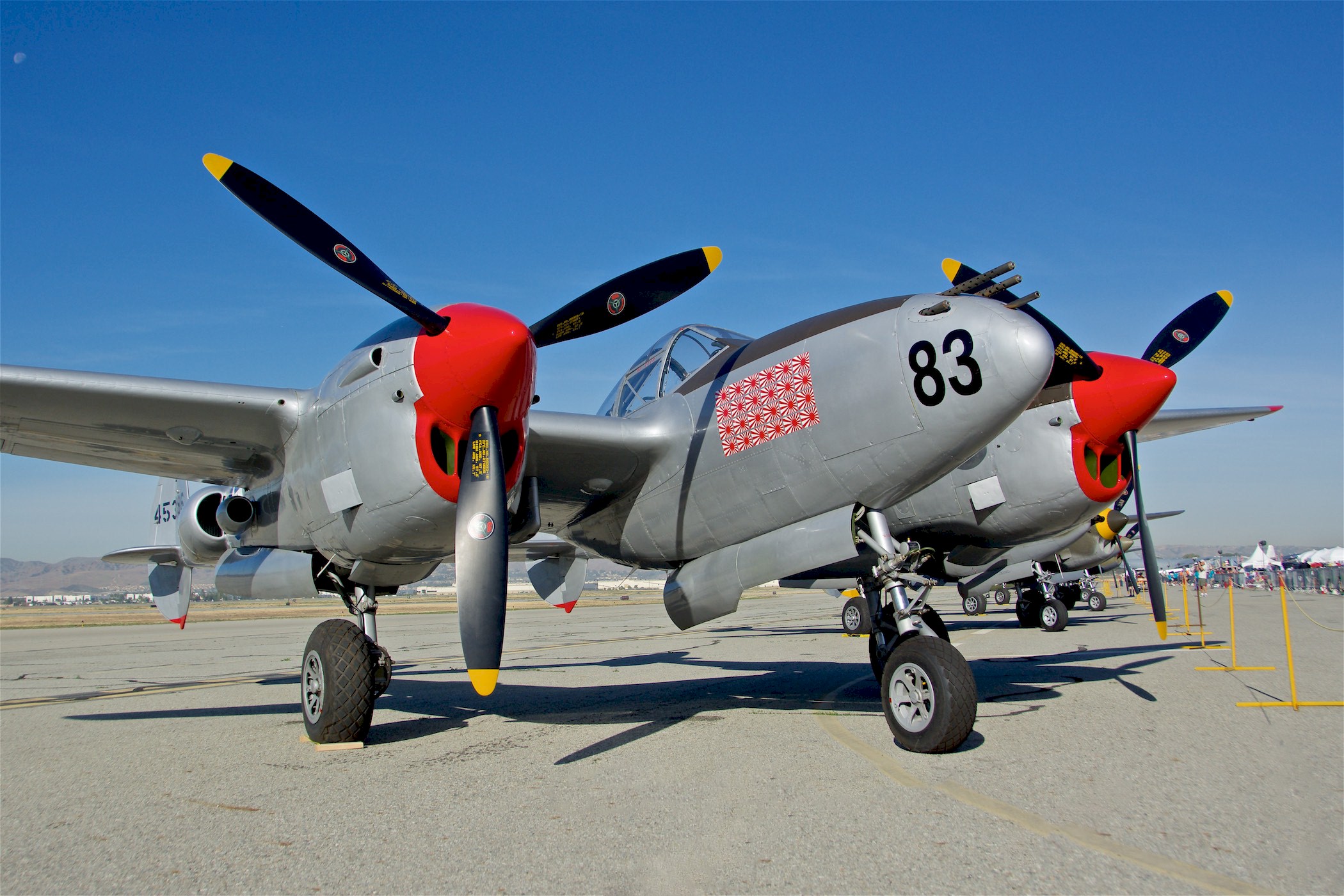
Contrary to what some think, the P-38 was not just a fighter, although it was the fighter of choice for many pilots. It  was so versatile it could also be a bomber (carrying high explosive and incendiary bomb loads), a reconnaissance plane and an escort.  There's very little it couldn't do.  It flew at amazing speed and altitude for its time, faster and higher than any other.

The sight of a P-38 Lockheed Lightning so terrified the enemy that the Luftwaffe dubbed it the "fork-tailed devil."  Guess they knew there'd be hell to pay if a P-38 crossed their path!

More about the 38's versatility later, but let's start at the beginning...

Development of the P-38

In 1937 the Army Air Corps (AAC) put out the bid to the aircraft industry to submit their ideas/designs for a new aircraft. It must be a pursuit warbird capable of interception and attack at high altitude.

The specs called for a top speed of 360 with a climb rate of 6 minutes from ground to 20,000 ft.

NOTE: Many of the photos on this site can be viewed enlarged.  Just click on the photo.  If there's a large version available, it will open.  Just click the "Back" arrow on your browser to return to the previous page.

The design team at Lockheed set out to create such an aircraft. Headed by Chief Design Engineer, Clarence "Kelly" Johnson, blueprints were drawn and submitted to the AAC (see drawings). The twin-engine, twin-boom was incredibly unique and revolutionary for its time. No one had ever seen anything even remotely resembling it. It was called "Model 22."P-38 Allison Engine

Lockheed won the contract, and the first P-38 was born.  (In case you were wondering, the "P" stands for  "Pursuit.") Called the XP-38, it had the serial number 37-457. The unique design left plenty of room for one of the most unique aspects of the plane -- the turbochargers (which supplied pressurized air to the two Allison V-1710-11/15 engines.

The firepower was equally as impressive and was comprised of one 20MM cannon and four .50 caliber machine guns.

P-38 Fire power!These guns allowed incredible precision when shooting at the target because they were all lined up right in front of the pilot, permitting concentrated fire power.

The XP-38 was the first fighter with the so-called "tricycle" landing gear, a big plus for the pilots. Other aircraft of the era had two wheels, making them squirrelly to land on many occasions.

The original XP-38 was designed to fly at 413 MPH, about 100 MPH faster than any other aircraft of the period.  The XP-38 was so top-secret that some enemy governments were rumored to do their best to sabotage it.  Some people thought the "bad guys" might be getting their wish because the XP-38 began having problems right from the start, including brake failure and flap linkage breaking.  However, determination (and a few design adjustments) won out and the maiden flight took place on January 27, 1939.

XP-38Lockheed decided (after only 5 hours of flying time) to make the announcement about their new warbird in a spectacular way -- they would challenge the current transcontinental speed record, held at the time by a guy by the name of Howard Hughes (7 hours, 26 minutes, 25 seconds).  Click here for nice shot of YP-38.

The XP-38 was disassembled and moved in the dead of night to March AFB in Riverside, CA, and on February 11, 1939, Lt. Ben Kelsey took off from there headed toP-38 Original Flight Route points East. Kelsey made a few refueling stops along the way.  First in Amarillo, TX, then on to Wright Field in Dayton, OH, and finally to Mitchel Field in Long Island, NY. (To read an incredible person-to-person account of this event, pick up a copy of Warren Bodie's book "The Lockheed P-38 Lightning (It Goes Like Hell).")

P-38 CrashKelsey reached NY in 7 hours, 37 seconds to set a new record.  Unfortunately, he had a few "challenges" on the set down and crashed the prototype into a golf course ravine just short of the runway.  The aircraft was a total write-off, but fortunately Kelsey escaped with only minor injuries.  (Read newspaper articles about the crash from the period.)

Next, we'll get into some of the particulars about the P-38P-38 Lockheed Lightning -- About


PRIVACY POLICY


Keep up to date on all the latest P-38 news.
RECEIVE OUR NEWSLETTER

Name:
Email:


ARCHIVES


Beautiful Tribute to
our Favorite Plane

Click on arrow below to play video. You must have high speed internet access for video to play properly. Click on below to expand video to full screen.


...miss the sound of those Allison engines though!

P-38 Items Now on

CLICK HERE

If you'd like to keep up to speed on all the news about our favorite plane, the "P-38 NEWSLETTER" is jam packed with all the latest.  We will give you every morsel we can find to keep you current on everything happening in the world of the P-38!.

YES, PLEASE KEEP ME POSTED!

(PRIVACY POLICY)


The P-38 Association relies on volunteers and donations for its survival.  If you'd like to donate some time, please contact Joe Onesty.  If you'd like to help us out with a donation just click the "Donate Now" button below.

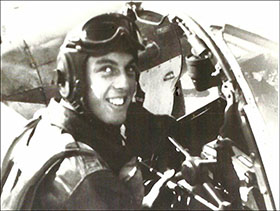
This website is dedicated to my Dad, P-38 pilot
Edwin C. Baquet.
If you'd like to make a donation honoring his
service, please click the
button below.


EDWIN C. BAQUET
December 25, 2007

Sign the Guestbook


The copyright to all graphics on this site are held by the original copyright owners.


© 2005  P-38 National Association Website  All rights reserved
Contact us