|
Tell a little
about yourself and your background
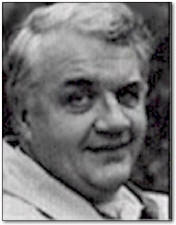
I was born in Minneapolis, Minnesota at almost the exact midpoint of
WWII, so my interest comes from just about the safest place and time in that somber period. My dad was one of those folks who had to get
into the action, so he volunteered for a stint in the Aleutians on
airfield construction in 1944-45. I guess my interest in WWII aviation
begins with that and with the stories my other relatives brought back
from their wartime service. They all had stories about the P‑38, and
my dad actually brought back pieces of aluminum from a P‑38 as well as
a crashed Achi "Jake" floatplane.
What got you interested in WWII history,
specifically the Pacific?
Most of my intellectual growth stems from World War II (history,
geography, philosophy, literature, politics, etc.). I remember with a
grimace those days as an undergraduate at the University of Minnesota
when I spent valuable study time in Walter Library going through the
histories of the RAF or USAAF rather than my course work. No matter; I
got the bug in a bad way until I spent a hitch in the USAF and was
discouraged by all the apathy about aviation in that outfit.
Did veteran
relatives play a part in your interest?
Some of my first memories revolve around the return of my male
relatives from overseas. One of my uncles was a U. S. Marine who saw
much service in the Solomons, and brought home a number of souvenirs
which were exciting to a young boy. I learned from him both the
intensity and the horror of the war. He never recovered fully from the
grimness of his experience, and hesitated to talk about the war unless
he happened to be drunk enough to expand on the loss of his friends in
the merciless combat of Guadalcanal. Another uncle was the archetypal
Army sergeant in North Africa. Both of these guys as well as my dad
who was in the Aleutians told me tales of the P‑38 and started my awe
for the machine.
Speak about your
work with the veterans of these aircraft
I started to get in touch with veterans at about that time and began
an interest in aces. Through some of the better aviation periodicals
of the time I got in touch with the Air Force Museum, the National
Archives and the Air Force Research Agency at Maxwell AFB. By the time
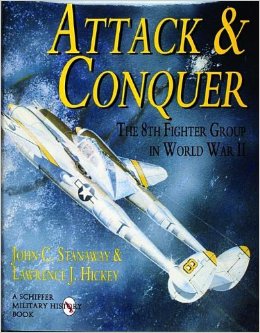
I published my first work I made some good friends like Jeff Ethell
and
Larry Hickey, and they led to many other good contacts.
Your titles
cover a wide range of Pacific WWII aircraft, what attracted you to
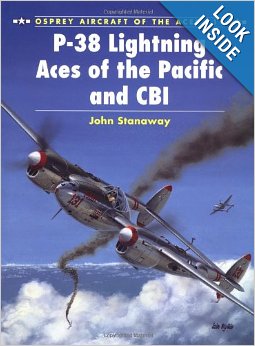
these aircraft and their stories? I developed a mad affection
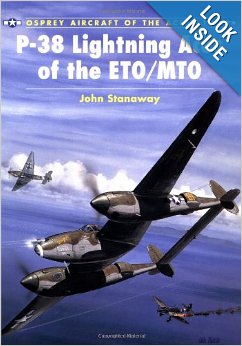
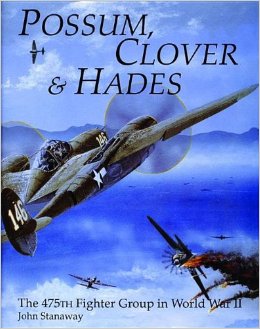
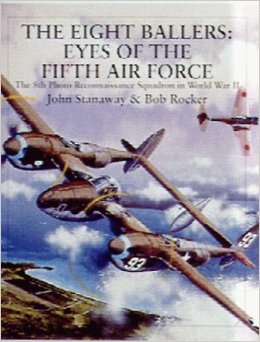
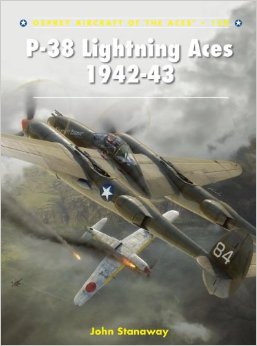
for anything made by pre-scandal Lockheed. The WWII types - P‑38,
Ventura, Hudson and Constellation - remain my favorite aircraft of all
time, and arguments with folks who denigrated those types led to
fanatical research and finally to enough material for the books that I
wrote.
Your books are
well written, speak about the research process behind them.
Basically, my research methods go from general to specific. I read
everything I can get my hands on, then contact government or
manufacturer sources for documents, and then go to historians,
veterans or other interested folks with specific information. My usual
research path is to go to the archives, and perhaps collect microfilm
that would give me a solid factual basis. The veterans groups are
invaluable and much of my deep understanding comes from attending
reunions and simply chatting with the guys. It is surprising how even
a mediocre interviewer like me can get lots of useful information just
by talking to the veterans. There are many foreign sources that will
cheerfully help someone like me. The Imperial War Museum in London,
The RAF Museum as well as the Canadian National Archives and the RAAF
Museum were all quite helpful. I have always had a special fondness
for the Lockheed Ventura, and was pleased to get help from USMC as
well as USN veterans through the help of Leatherneck and Wings of Gold
publications.
Let me just mention a few with whom I have
worked successfully. Steve Ferguson is one name that comes easily to
mind. We had the terrible habit of spending lots of time on the phone
just exchanging views on Pacific air war history. Steve is perhaps
underrated as a researcher, but his depth of knowledge is formidable.
In the same camp is Bill Hess, who has written the most trenchant
stuff on the Mustang, and especially the 354th FG. (Steve Blake is
doing the history of the 354th, and I expect a crackerjack work with
lots of incidental anecdotes.) Bill is perhaps the dean of researchers
into the history of fighter aces, and has influenced everybody
including Frank Olynyk and me. Of course, my late pal Jeff Ethell was
a class act. We lost a lot of good thinking in the field of aviation
history when he was killed, and I increased my sour taste for W. Bodie
when he said some unkind and unfair things about his partnership with
Jeff. I only met Jay Robbins once when he and his wife attended a
convention that I happened to also attend. He seemed quite the
gentleman, and was the soft-spoken ex fighter pilot that every account
seemed to suggest.
Speak about your
work with the P‑38 Foundation
Steve Blake actually got me onto the
P‑38 Association. I am not a good American who likes to join clubs
or such organizations, but the P‑38 Association is such a member
friendly group that I got along well with it. Only the P-51
Association is like it in encouraging membership.
What are your
upcoming projects - books, collaborations
The aviation history business is in the dumps right now, with little
encouragement for folks to do their work. I have a preliminary
manuscript for a history of airline colors, but nobody wants it. Also,
I have a manuscript for a novel about P‑38s in New Guinea that
registered some interest for a moment before it fizzled. I am like
Jerry Lewis in that France is more interested in my work than my own
land happens to be. I am currently doing some articles on American
aces for Aero Journal.
Thank you for the interview Mr. Stanaway. |